
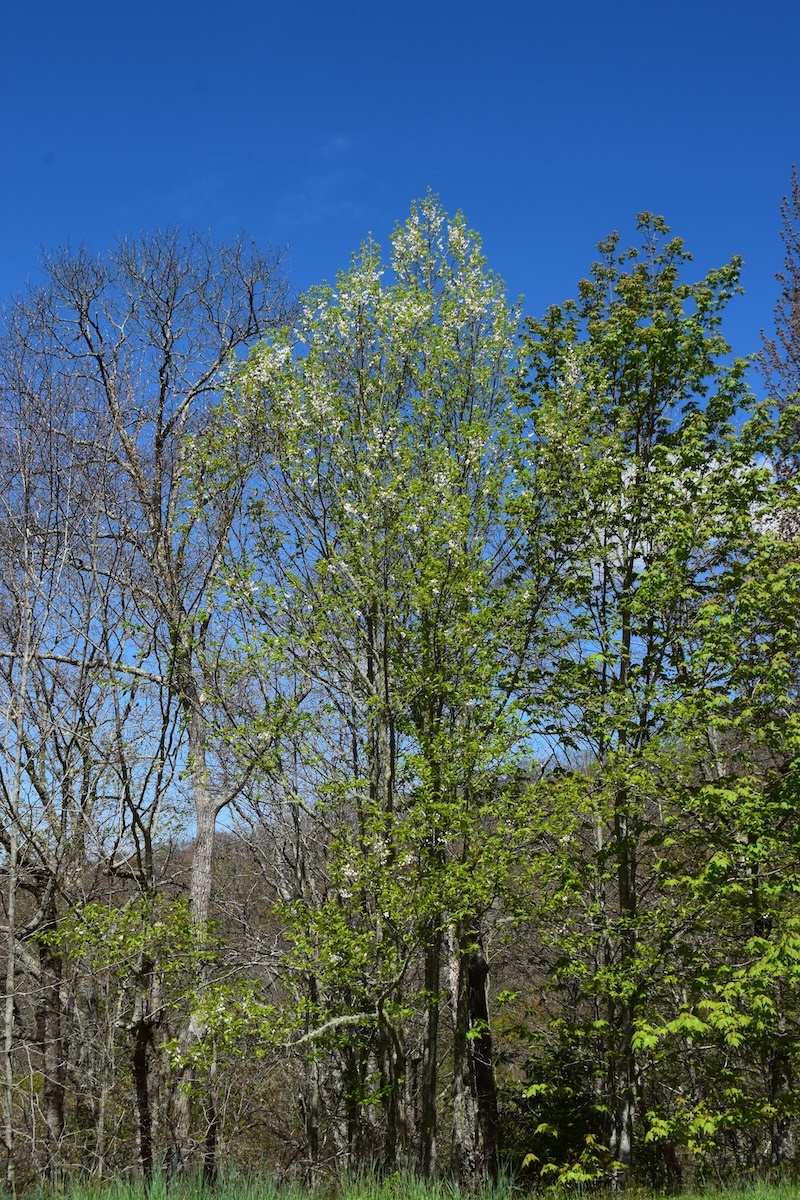
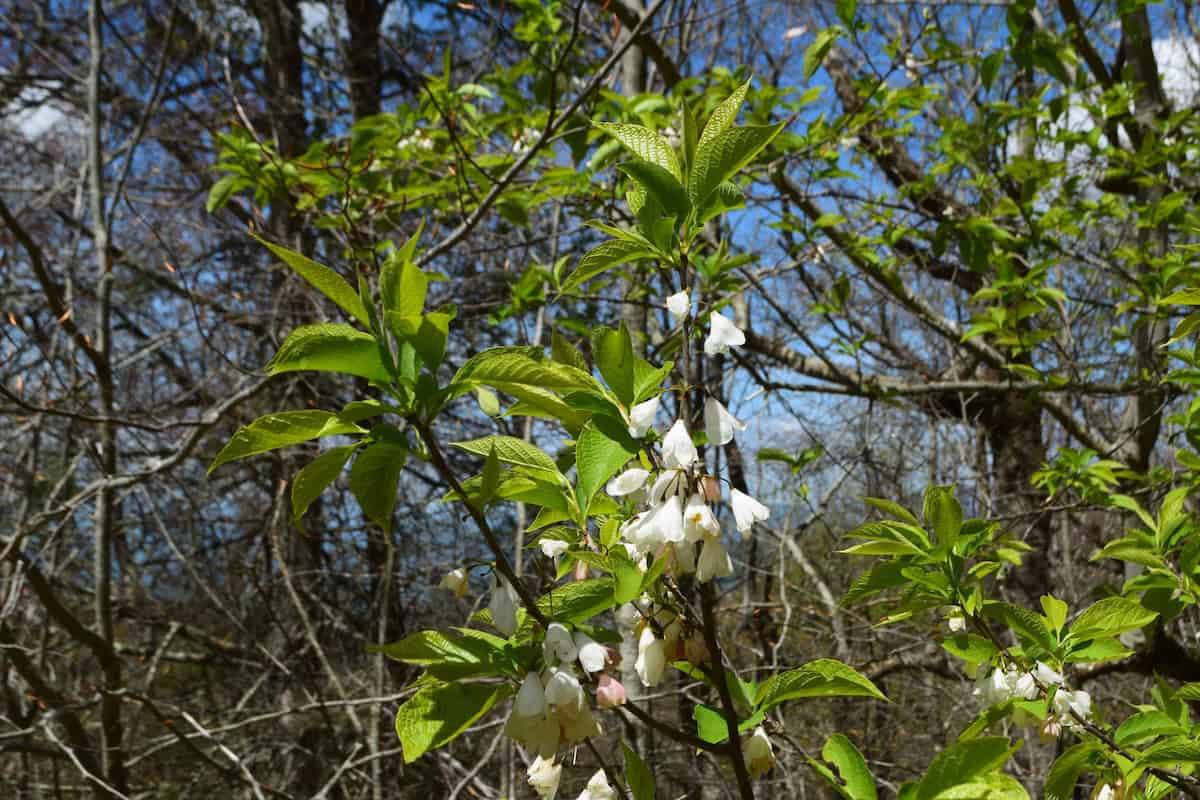
To witness silverbells in flower at 5,000’ elevation along the Blue Ridge Parkway, clinging to mountainsides, is an unforgettable experience. In May 2026, Bonnie and I were botanizing along the Parkway and encountered them in flower at 5105’ elevation (Photos 1 and 2 below). I have always loved this species, planting the first in our Urbana, IL, garden in the 1970s. The transplanting difficulty, specifically with large balled and burlapped material, is the Achilles’ heel that limits everyday availability. Certainly, container growing facilitates reliable transplanting. I observed beautiful, cultivated specimens from West Lafayette, IN; Canterbury, NH; Orono, ME; to Sandwich, MA and South. The species has proven, when established, its mettle over time. The nursery industry continues to explore new flowering tree genetics beyond Cornus, Cercis, Lagerstroemia, Malus, and Prunus. There are numerous cultivars of the previous mentioned genera, few commercial Halesia cultivars. The search begins/continues.
Halesia taxonomy is muddled with the Flora of the Southeastern United States (FSEUS) listing Halesia tetraptera as the correct name while Germplasm Resources Information Network (GRIN), maintained by USDA, accepts H. carolina. Halesia monticola is occasionally used to describe larger growing trees from the mountainous southern Appalachians but has been folded into H. carolina. Additional common names include common silverbell, mountain silverbell, snowdrop tree, bell-tree, opossumwood, rattlebox, calico-wood, and tisswood.
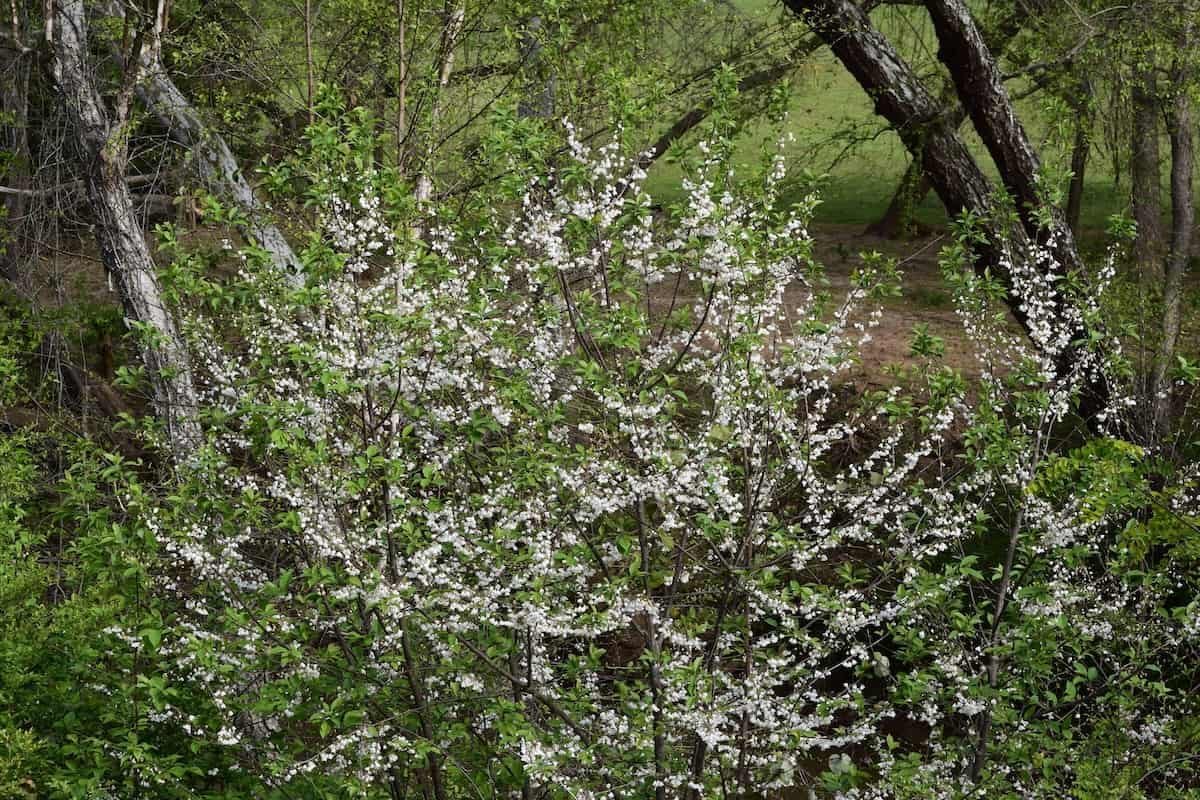
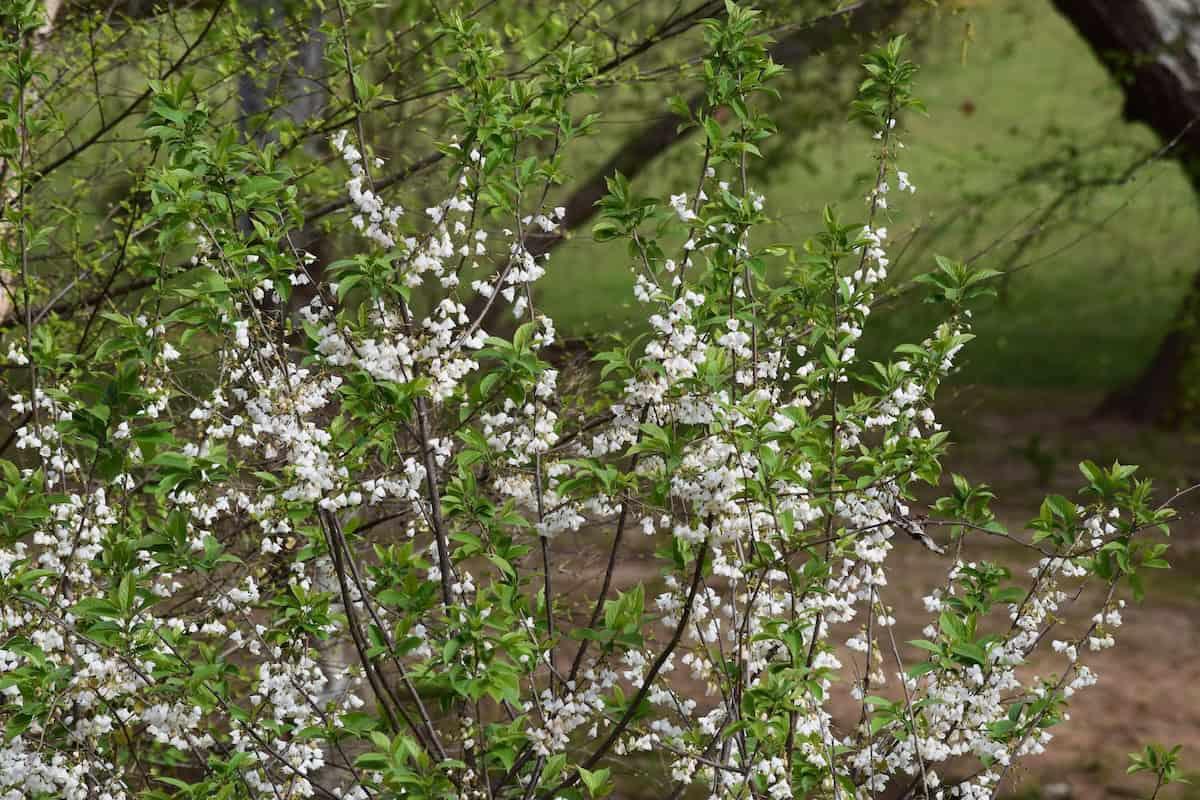
The species is concentrated in the southern Appalachians and is common along the Blue Ridge Parkway. The native range stretches from West Virginia, southern Ohio and Illinois to eastern Oklahoma, south to Florida and Alabama, growing on moist bottomlands, mountain slopes and hardwood coves to 5,500’ elevation. In Athens, GA, it is abundant along the Middle Oconee River (Photos 3 and 4 below. March 29, 2026) and neighboring streams, primarily as an understory tree, flowering in late March 2026 at ~900’ elevation and one month later at 5,000’ elevation. The variation in sizes and quantities of flowers from tree to tree opens/primes the floodgates for superior selections.
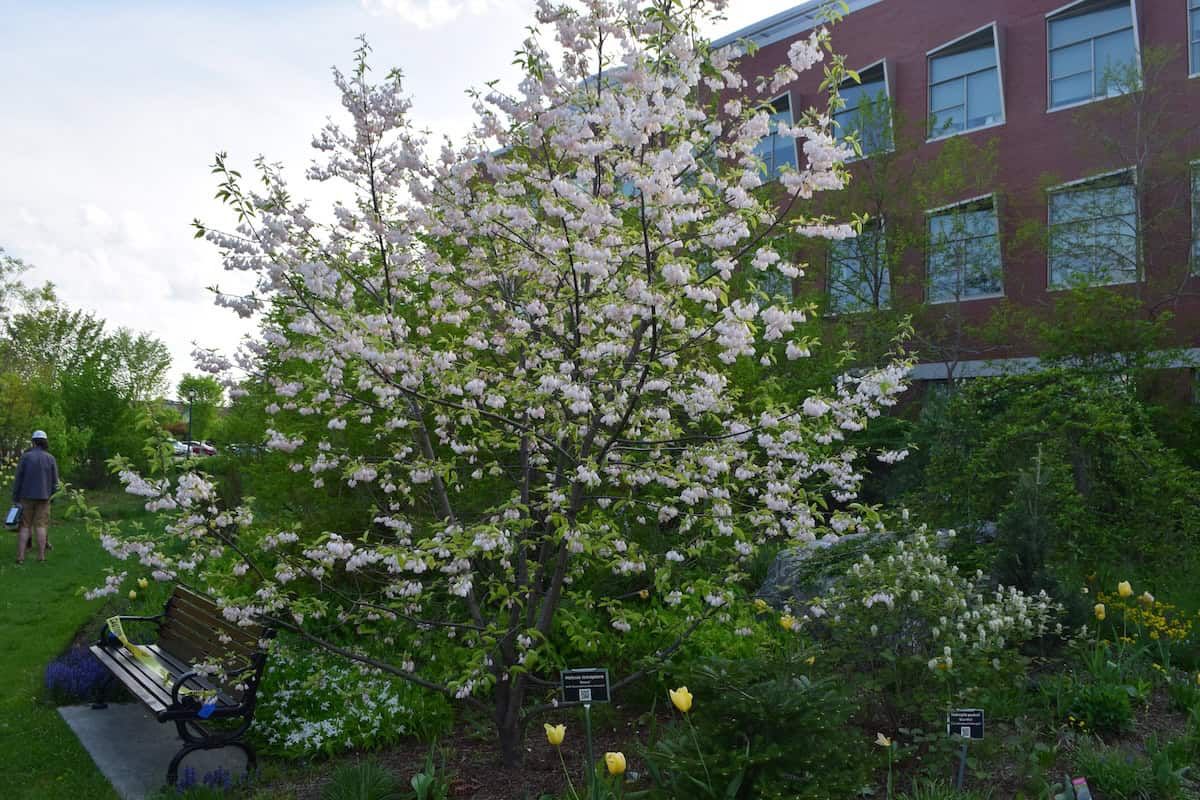
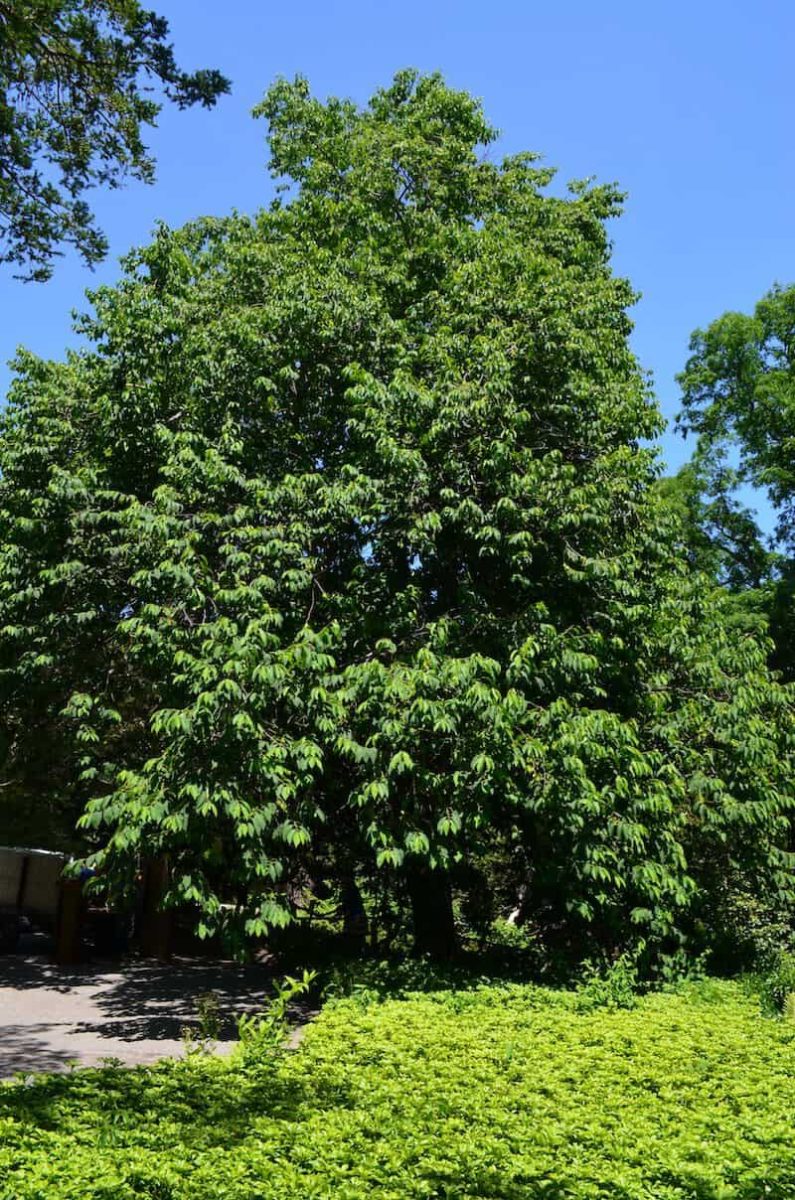
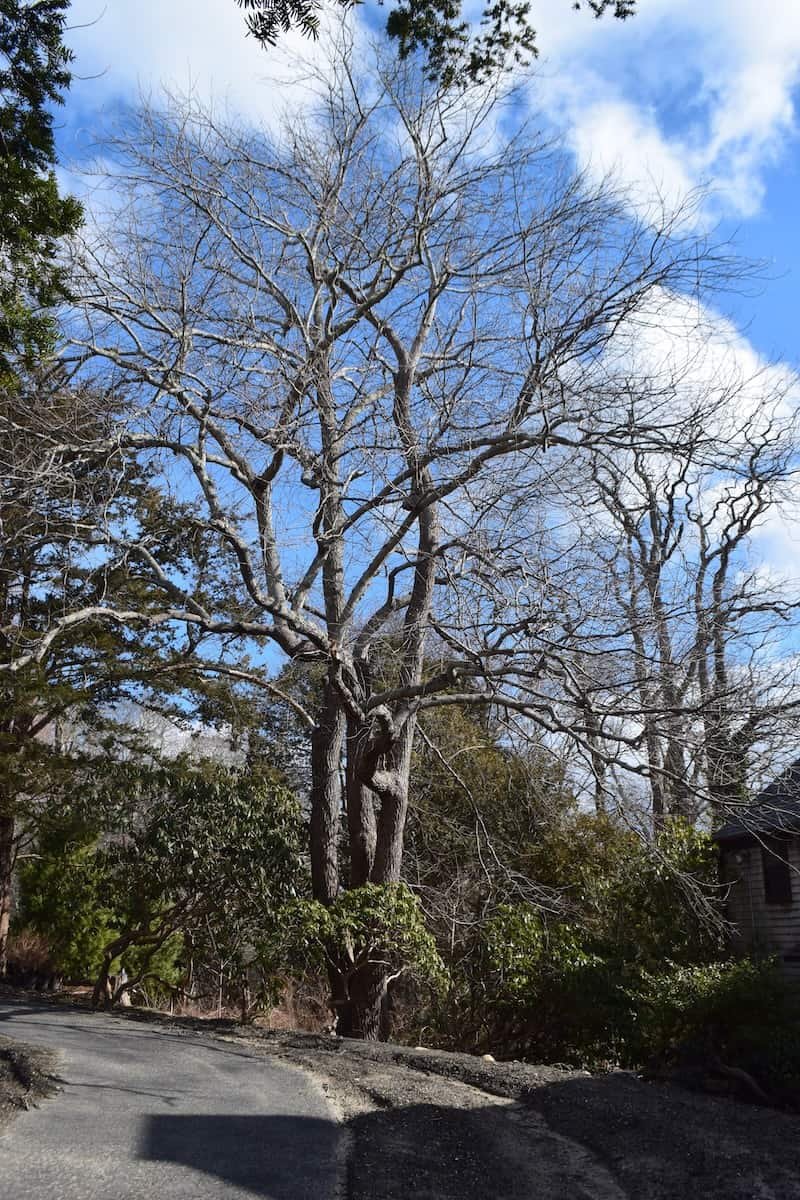
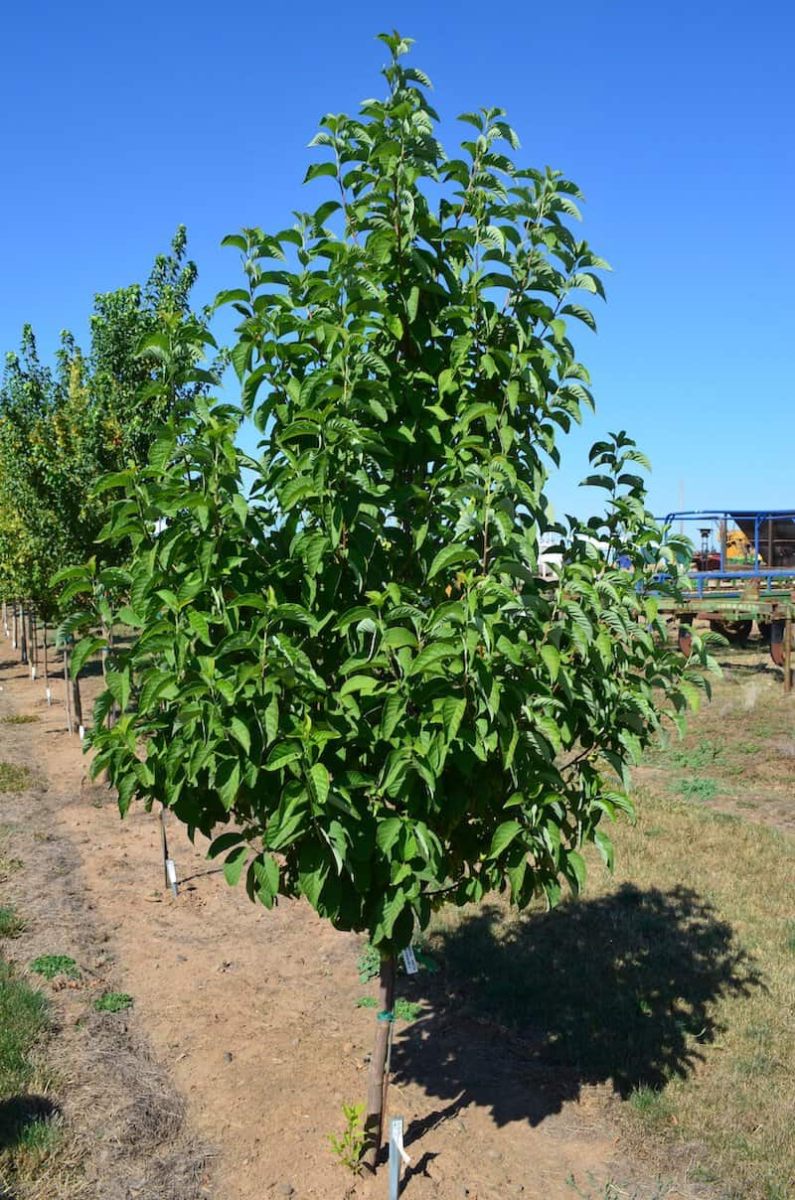
Habits vary from multi-stemmed, spreading outlines (Photo 5 above. Tree in flower at University of Vermont, Burlington) to tall, airy, low branched specimens with comparatively narrow crowns and ascending branches (Photo 6 and 6a below at Heritage, Cape Cod). Estimate 30 to 40’ high and wide for the former; to 60 to70’ for the latter; the National Champion 68’ high and 66’ wide with 129” trunk circumference.
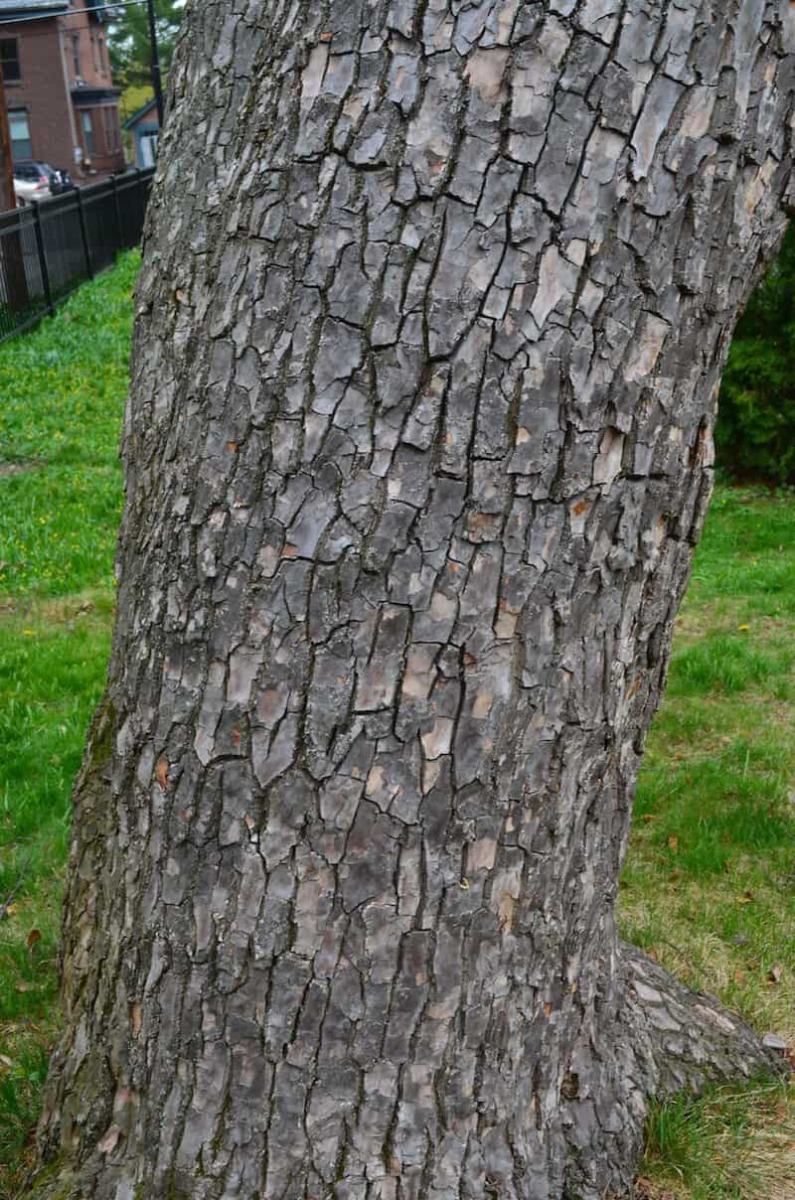
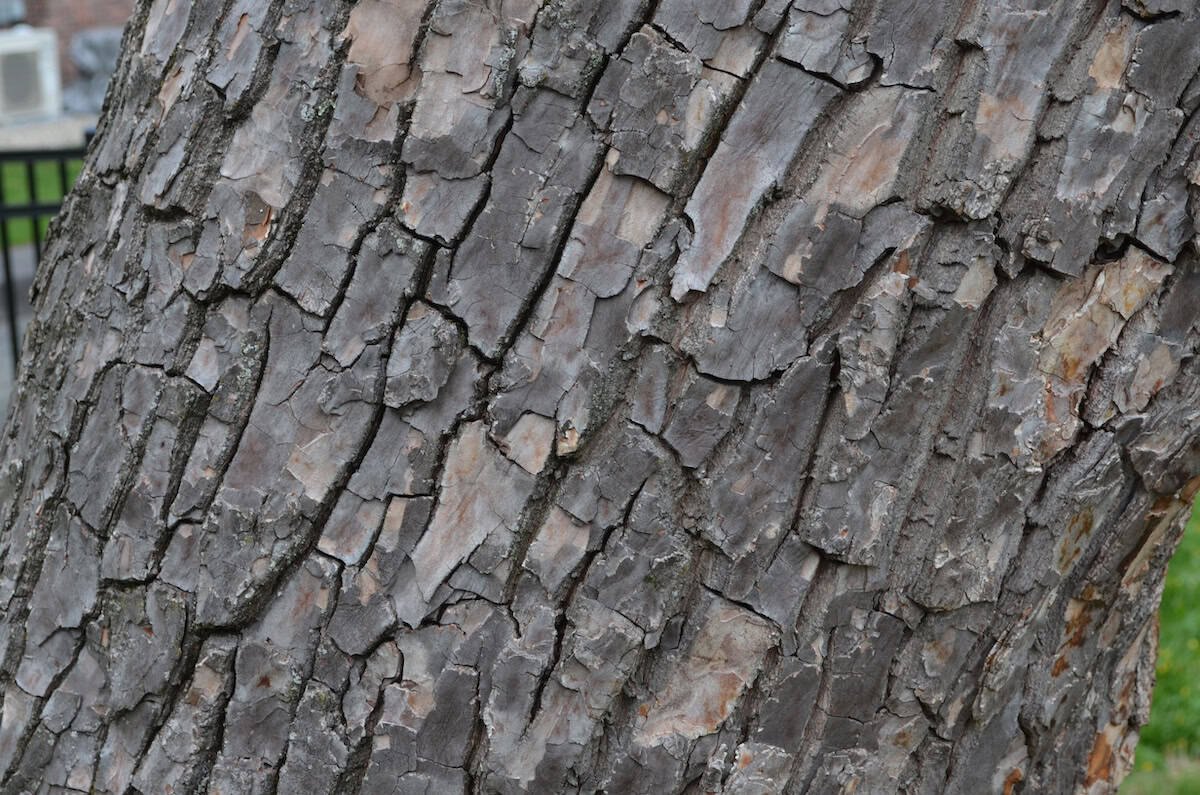
The bark on larger trunks is vertically and longitudinally checkered into irregular plates with shiny gray/brown/black scaley surfaces (Photos 7 and 8 below); younger branches gray with black longitudinal striations. Second year stems develop stringy, peeling bark, providing an ironclad Identification feature.
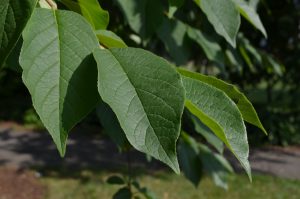
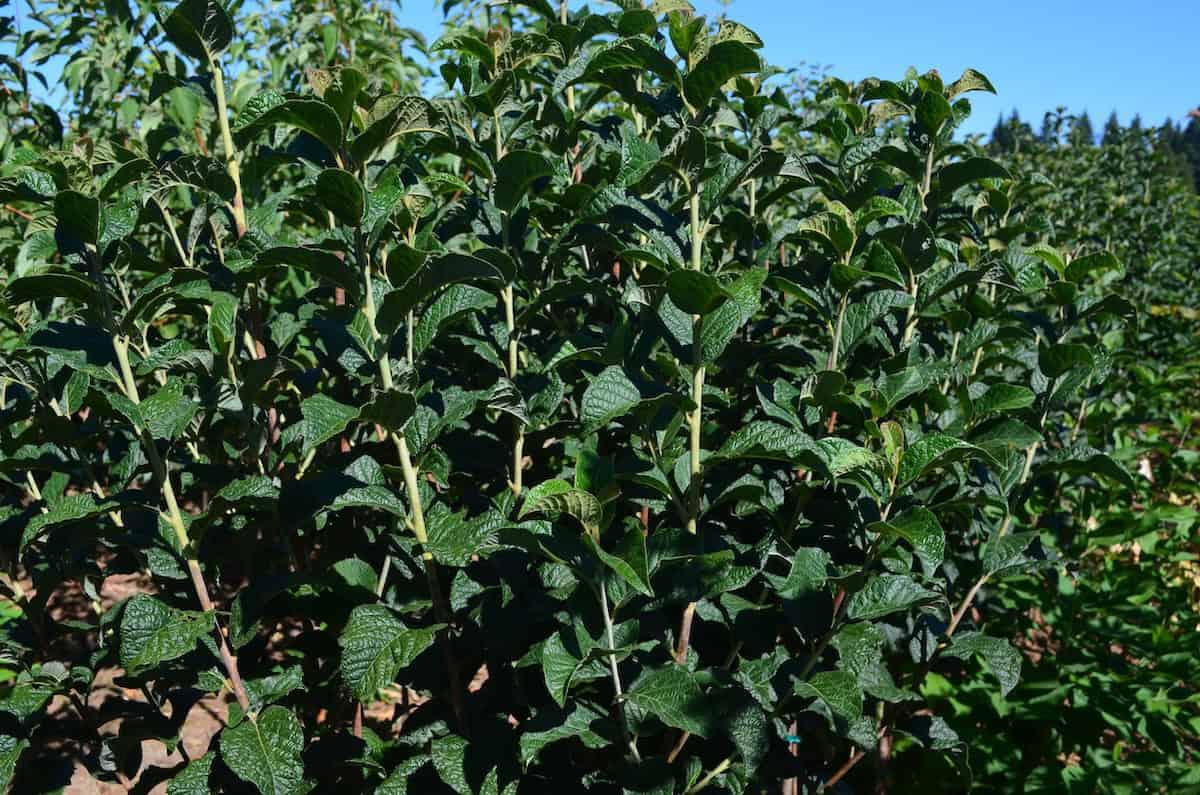
Foliage is medium to dark green (Photo 9), 2 to 5” long, 1/3 to 1/2 as wide, the margin entire to finely serrated. Leaves emerge early, often with the flowers. On the Parkway, April 30, silverbell and serviceberry were the only species in flower with expanded leaves. Fall color is yellow at best.
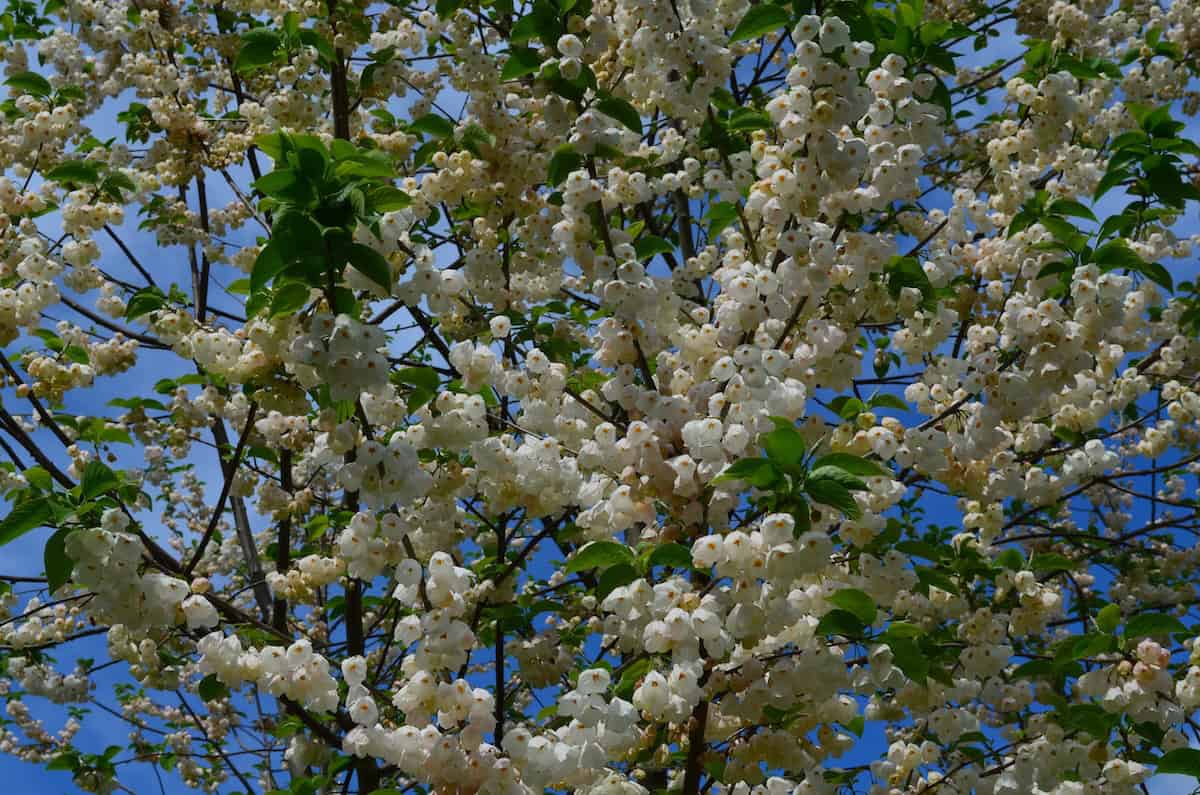
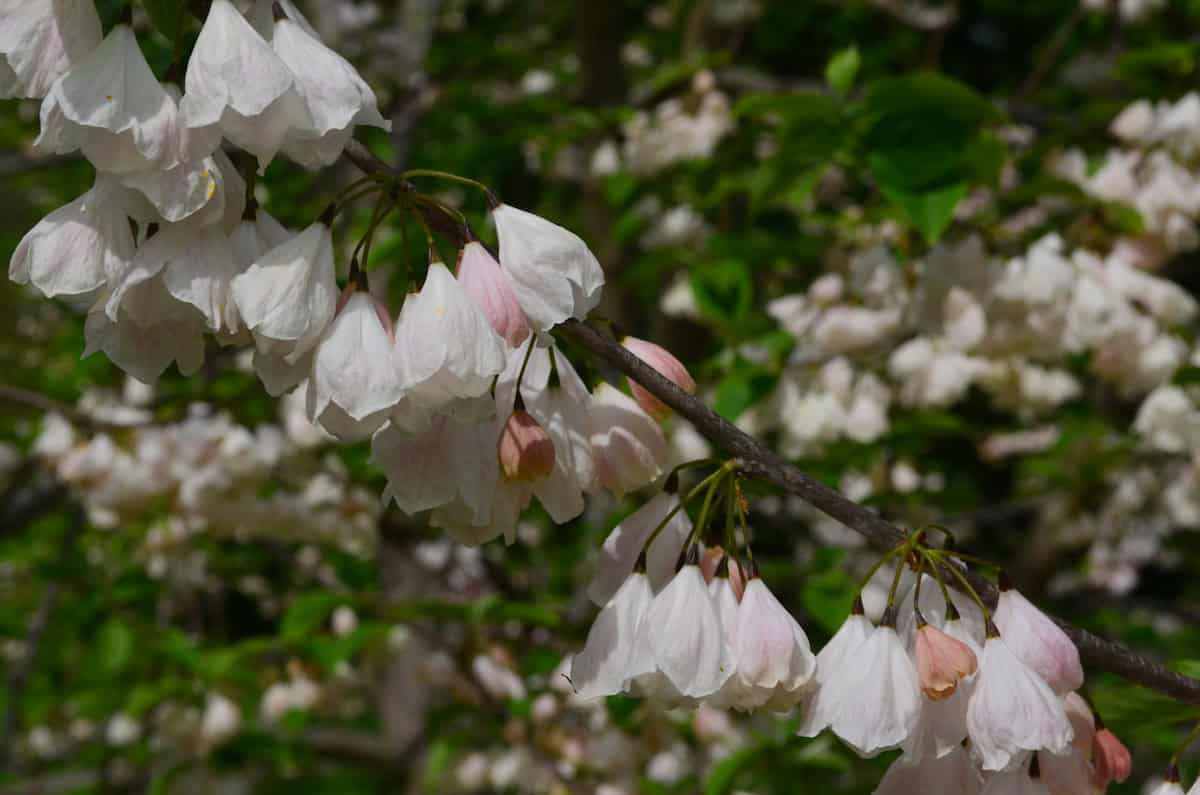
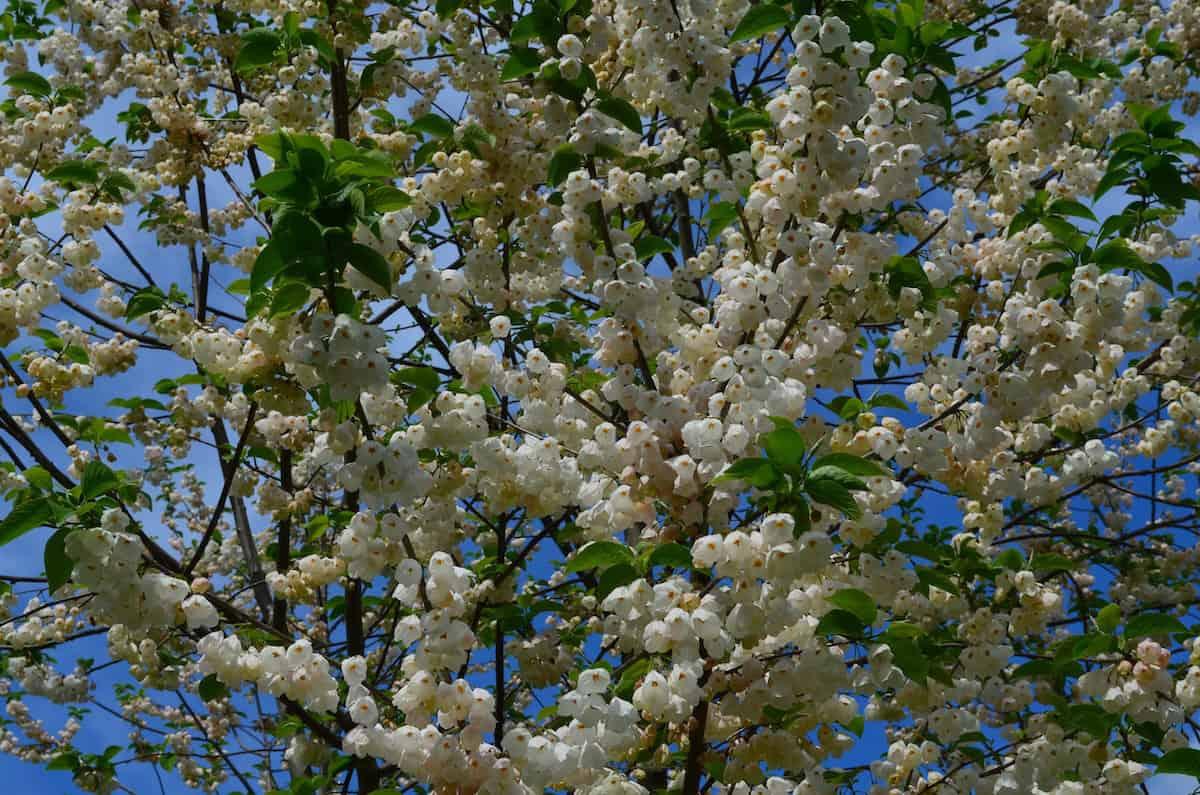
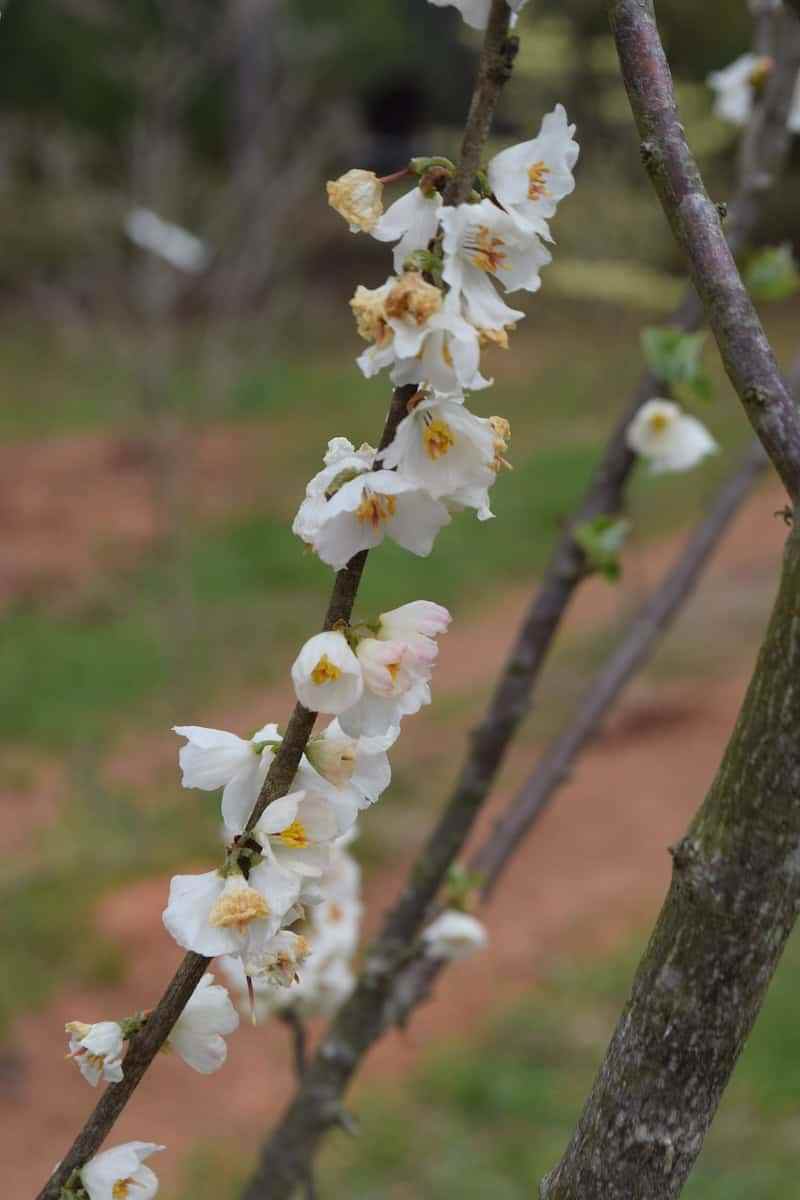
Flowers, white to pink, appear on naked branches and/or with the emerging foliage on pendulous ½ to 1” long pedicels in clusters of 2 to 5, suspended and dangling from the branches (photo 10). Each white, occasionally light pink, bell-shaped, ½ to 1” (11/2”) long, shallow four-lobed flower bears 12 to 16 stamens. The spring flowers attract bees and early season pollinators. The most floriferous, large flowered tree (photo 11) observed by this author resides in the Arnold Arboretum, Jamaica Plain, MA. Jack Alexander, retired plant propagator, introduced me to the tree in May 2013. I have yet to experience any with greater explosive floral dynamite. It deserves propagation, naming, and introduction.
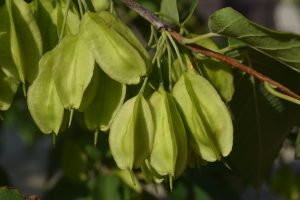
Fruits are unique, with four, equal sized wings, each 1 to 11/2” long, bright green (photo 12), then parchment to brown, persisting into winter. Fruits may contain 2 to 3 seeds, a condition termed polyembryony. Seeds are difficult to germinate, requiring several cycles of warm/cold moist stratification. Best to collect in fall, sow in containers or ground beds, protect from critters, and exhibit extreme patience. This year, I purchased seedlings from Heritage Seedlings, Salem, OR, which is easier than doing it in-house.
Silverbell should be transplanted using container-grown material into moist, well drained, acidic soil. It may develop chlorosis in high pH situations. Displays the ability to thrive in shade or full sun (flowering maximized in full sun), often as an understory plant in the wild. Our first Georgia home abutted Barber Creek, Oconee County, with silverbells suspended from the banks. There were numerous river birches, water oaks, boxelders and American hornbeams competing for real estate, but the silverbells held their own. Silverbell is adaptable in zone 4b to 8.
Propagation by commercial nurseries is via cuttings and budding. Broken Arrow Nursery, Hamden CT, employs cutting propagation. The rooting is easy; the difficulty is overwintering. Typically, cuttings are rooted, not disturbed, maintained in an overwinter structure just above freezing until shoots emerge in spring. Adam Wheeler, propagator/owner, mentioned he has been a fan of Halesia for a long time and is sure there is broader room for it in the industry. He noted that Broken Arrow has roughly a dozen taxa in the collection. The catalog/web site is a treasure trove of exciting plants. Schmidt Nursery, Boring, OR, propagates silverbell from cuttings and budding. Current preference is budding.
Several cultivars are noteworthy, presented below and commercially available. They include: ‘Arnold Pink’ produces flowers rose-pink flowers, which are pinker in cool weather. First seen by me at the Case Estates, Weston, MA, part of the Arnold Arboretum, in 1978. Flowers are abundant, large and pink. Best for color in the North.
Crushed Velvet’ is a small compact tree with dark green leathery foliage and small white flowers. Does not overwhelm in flower but the compact habit and unique foliage legitimize its use. Listed at 15-20’ high and 12-15’ wide. Personal experience tells me smaller. Would make a pretty patio or small garden space tree (Photos 13 and 14 below).
‘Jersey Belle’ from the late Princeton Nursery, grows 20 to 25’ high and 15 to 20’ wide producing abundant, large white flowers and fruits. Habit is described as tight/compact. Leaves dark green. Zone 4 (Photo 15 above).
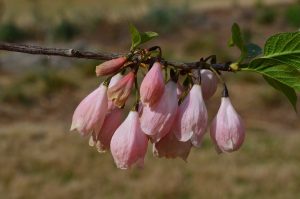
‘Rosea’ umbrella seedlings with pink flowers. Possibly should be listed as forma rosea. ‘Arnold Pink’ and Rosy Ridge’ are deeper pink flowered selections of forma rosea (Photo 16 below).
‘Rosy Ridge’ with slightly deeper pink flowers than ‘Arnold Pink’ was discovered at Hawksridge Farm, Hickory. NC. Grows 30’ by 20’. Flowers larger than typical species. ‘Rosy Ridge’ flowered profusely and maintained rich pink in the Dirr garden (Photo 17 below).
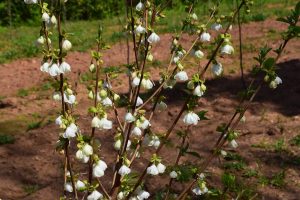
‘UConn Wedding Bells’/ ‘Wedding Bells’ a smaller tree with large flowers,15 to 20’ high and wide, discovered in Ohio, and introduced by Mark Brand, University of Connecticut (Photo 18 below).
Silverbells may take detective work but can be found in commerce. I recommend Broken Arrow Nursery and Pleasant Run Nursery. Other cultivars/taxa scattered through the literature include forma dialypetala (split corolla), ‘Emily Marie’, ‘Lady Catherine’ (weeping habit), ‘James Laubach’, ‘Meehanii’, ‘Savannah River’, ‘Silver Splash’, the broad category ‘Variegata’ (leaves splashed with cream/white/yellow), and Vestita Group (large trees). Trees and Shrubs Online discusses several of those listed.