
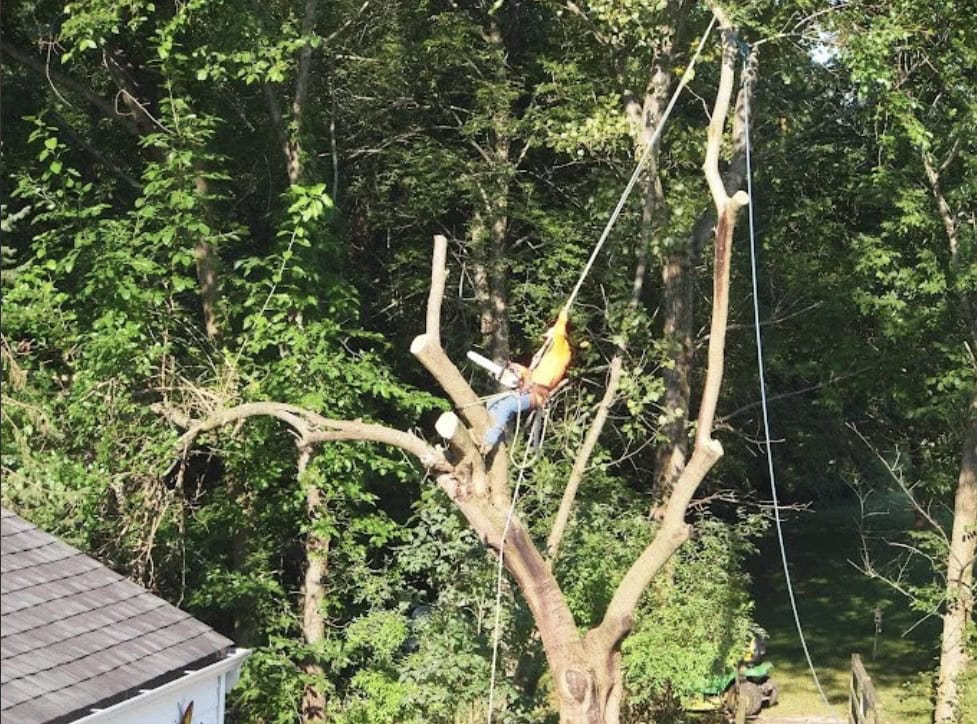
Scott’s Tree Experts serves the Columbus and Cleveland markets in Ohio. Owner Scott Lacey is a TCIA member and certified arborist who's been an HMI member for many years, and his company successfully deployed into Nashville on behalf of HMI during the recent ice storms impacting the area.
Upon starting his business years ago, Scott discovered that the HMI program was the most efficient way to work on insurance claims. We recently conducted an interview with him and believe his insights can be helpful for other arborists.
How has the HMI program has supported your business’s growth?
HMI has played a major role in our growth by providing a consistent flow of high-quality, insurance driven work, both locally and through large scale storm deployments. I’ve been with HMI since 2011 and have completed hundreds if not over a thousand assignments over the years.
Being part of a structured network has allowed us to scale efficiently while maintaining consistency. HMI has also helped shape how we approach insurance tree work. As a partner within the network, we benefit from early access to industry updates, best practices, and evolving standards for documentation and billing. That knowledge has been a key factor in our growth and ability to operate at a higher level.
At one point, there was a period where we were not actively working within the HMI network, but we continued to utilize the HMI cost guide and overall process in our operations. That experience reinforced the value of the system, and ultimately led us back to working within the network. We’ve built our operation to handle a high volume of work, and HMI has provided the platform and structure to support that capacity.
What advice would you give arborists considering membership in the HMI program?
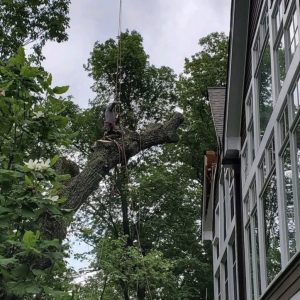
Understand the system and be honest about your capabilities. This is not typical residential tree work. It’s fast paced, production-based storm and insurance work that requires the right equipment, trained crews, and strong documentation. Learn and become educated of what is covered by insurance.
For deployments, preparation is everything. You must be self sufficient, financially prepared to handle volume, and ready for long days – often 16 hours or more in stressful conditions. Not every crew is built for this. You need the right people who can travel, adapt, and perform under pressure.
If you’re new to it, start small, learn the process, and build from there.
What challenges did you overcome when you first started handling HMI referrals?
The biggest adjustment, early on, was aligning with the documentation structure. However, adapting to HMI wasn’t overly complex for me because I already had experience in disaster work. I started storm-related tree removals in 2004 following Hurricane Charley. So, I understood the urgency, safety risks, and complexity involved. HMI brought structure and consistency to that experience, but learning to properly scope, document, and justify work within the system was key.
Back in 2011, the process was much more manual. We didn’t have smartphones or the mobile app, and everything was handled with paper carbon copies, scanners, laptops, and constant back and forth through email. Documentation was time consuming and more difficult to manage, especially during deployments.
As the system evolved through RMS and eventually the mobile app, it significantly improved efficiency. Today, everything is highly organized, streamlined, and easier to manage in the field, which has made storm deployments much more effective. Those were the early days, and the improvements since then have been a major advantage.
What makes your company distinct within the Columbus market?
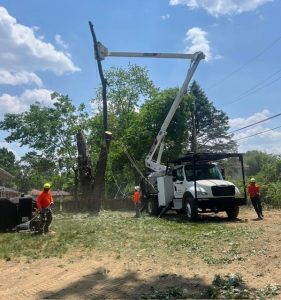
One of the biggest things that sets us apart is our responsiveness. In emergency situations, we can often get to people right away.
We also run a unique rolling schedule. Unlike many companies that book jobs weeks out with fixed appointment times, we group work geographically and move efficiently from job to job. Labor and fuel are expensive, so this model allows us to maximize efficiency and keep crews working not sitting behind a windshield.
That approach isn’t for everyone, but for customers who want the work done quickly: especially during peak or storm seasons it’s the most effective way to get on our schedule and get the job completed. It also allows us to pivot quickly when storm deployments arise. Our customers understand that disaster response is a core part of what we do, and when major storms or hurricanes hit, they know we may be mobilizing to those areas.
Have you experienced anything especially challenging about serving clients in your region?
The biggest challenge isn’t necessarily the region itself : it’s educating homeowners on what insurance actually covers versus what it doesn’t. That’s a major part of the process.
Homeowners often assume everything is covered, and when it’s not, it can create frustration. As contractors, we’re often the ones having those first conversations and helping them understand the limitations of their policy. It can also be uncomfortable at times, because naturally you want to help them with everything tree-related, but insurance typically only covers mitigation to allow repairs to the structure. That distinction can be very difficult for homeowners to understand.
Managing those expectations while still moving the job forward is one of the more challenging aspects of this work.
How does using the HMI Connects mobile app help your business?
We use the app regularly. It helps streamline communication, keeps all job information organized, and allows us to document work in real time. One of the biggest advantages is that it can store information even when you don’t have cell service which is common during storm events due to downed towers and then upload everything once signal is restored. That ensures you don’t lose progress while documenting an assignment.
The app has been a game changer compared to the early days when the system was first evolving. That level of organization is critical when managing multiple jobs and making sure everything is properly documented for insurance purposes.
Do you have any stories of CAT events or deployments that stand out?
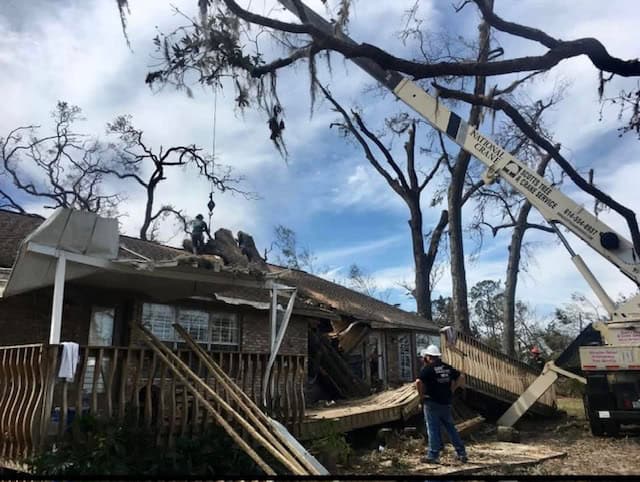 2020 stands out as one of the most intense years we’ve experienced. Between COVID and a constant stream of storm activity, we completed 7 separate deployments and worked assignments across 9 different states. In some cases, we were returning to the same areas just months later for entirely new storm events.
At times, it honestly felt like we were musicians on tour constantly moving from one state to the next. That year really highlighted what this line of work demands long hours, constant movement, and the ability to adapt quickly in unpredictable conditions.
Is there anything else that you would like to share?
One important aspect of our operation is how we utilize HMI’s cost guide. It provides a data-backed standard for pricing based on a large volume of real-world tree work. We rely on the cost guide not only for HMI assignments but also for non-network insurance jobs.
The guide is a powerful tool when dealing with insurance carriers that attempt to underprice emergency mitigation work. Because it’s backed by extensive industry data, it represents true customary pricing. Most experienced adjusters already know the cost guide and understand its validity. When they don’t, they find out very quickly during the process.
Insurance carriers are required to pay reasonable and customary rates for services, and the HMI cost guide establishes that standard clearly. Once the guide is presented properly, it sets expectations, limits pushback, and ensures the work is compensated the way it should be.