This HMI article/blog is based on a February 2014 consulting visit to the University of Massachusetts (UMass), Amherst. I graduated from UMass in 1972 and continue to support the University. The education was superlative and my wife, Bonnie, and I are forever thankful for the many friendships that continue to the present. Todd Cournoyer, campus landscape manager, asked whether I would confer with the staff about tree planting initiatives across campus. Off Bonnie and I journeyed on February 10, 2014, for what became an extended stay owing to a major snowstorm and cancelled flights from Hartford to Atlanta. I presented “In Praise of Noble Trees” with the idea of stimulating discussion about new trees and sustainable planting. The landscape architect, director of campus facilities, Todd, and I committed to kick-start the planting process rather than adjourning with no action.
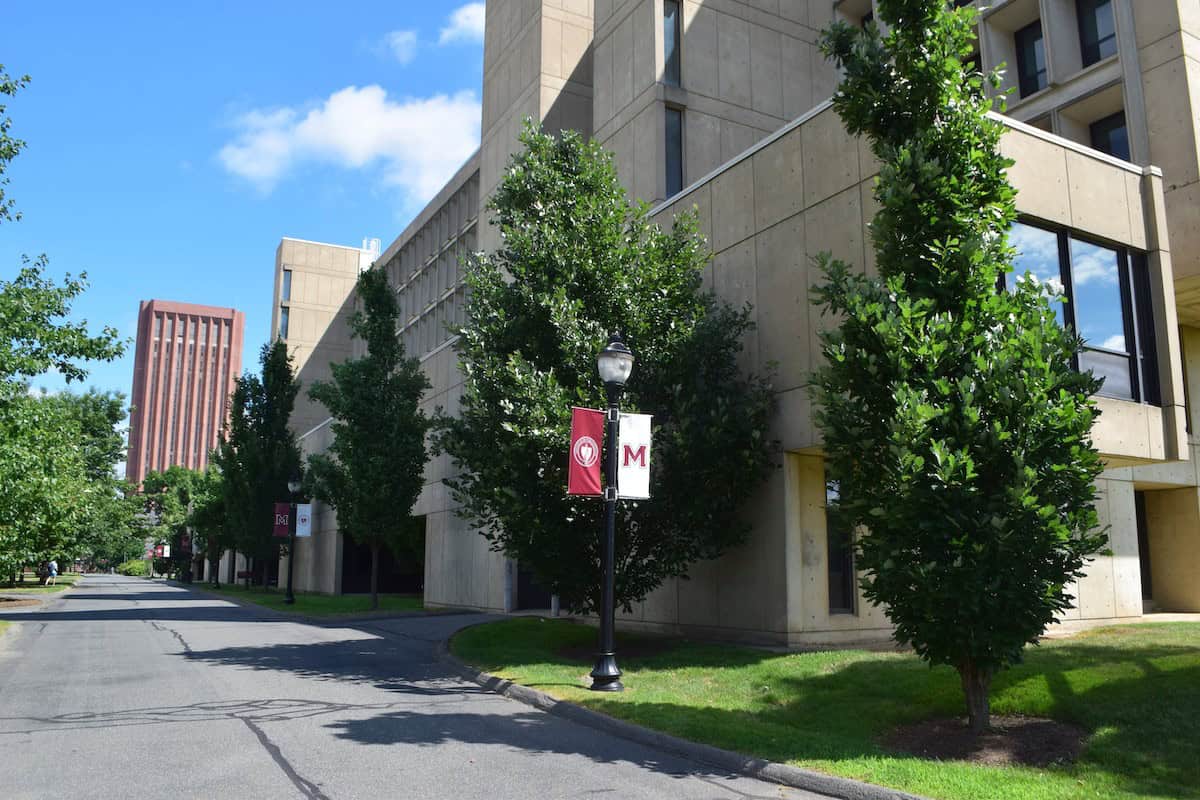
We targeted several prominent areas for immediate attention including the pedestrian mall through campus as well as the narrow planting strip between the sidewalk and Herter Hall, a stone age, bland, concrete building. Oaks were suggested for the mall area, and 15 species were planted in 2015/16. For the Herter Hall space, I recommended as many different fastigiate oaks as could be located. Todd did Yeoman’s work sourcing Quercus robur × Q. bicolor Kindred Spirit®(‘Nadler’), Quercus robur × Q. bicolor Regal Prince®(‘Long’), Q. bicolor Beacon®(‘Bonnie and Mike’), and several Q. robur ‘Fastigiata’ seedlings. The July 2024 photo shows the trees competently camouflaging the gray concrete. (1. above)
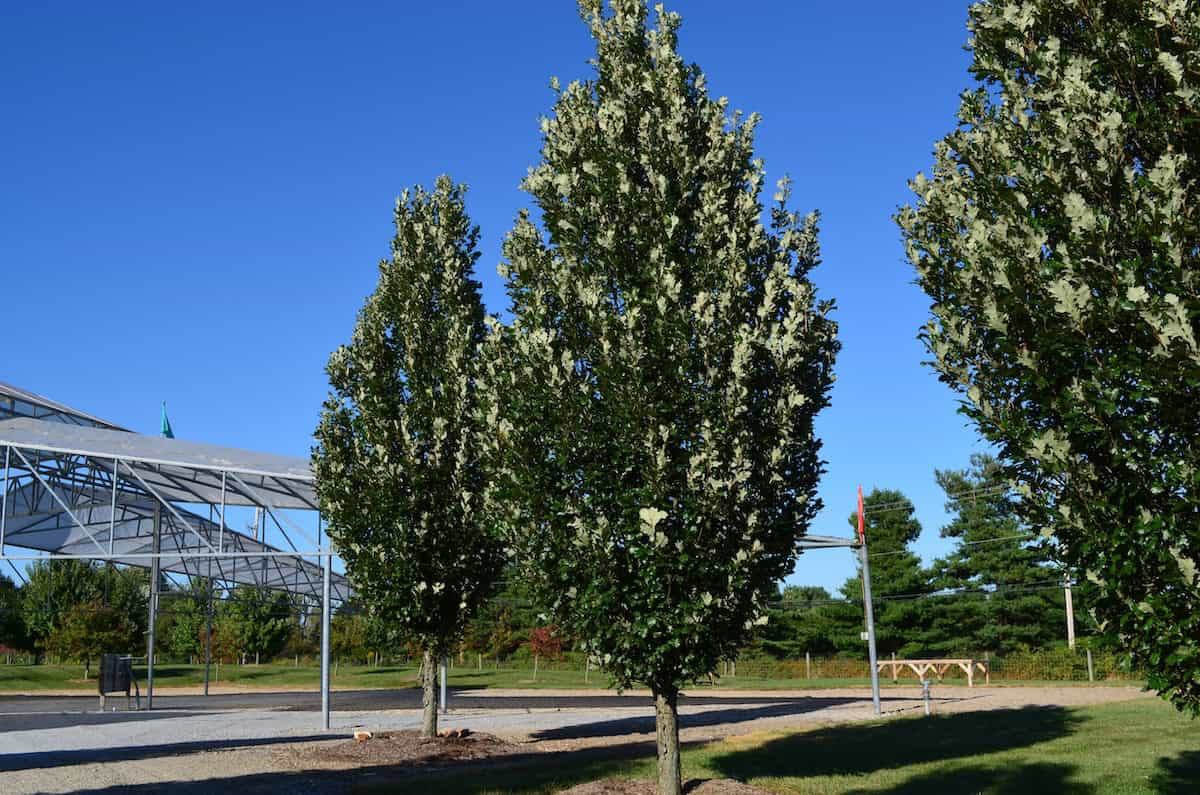
Seedling Q. robur ‘Fastigiata’ are variable in habit (1a. below) and mildew susceptibility. (1b. below) Beacon®, (2. below) Kindred Spirit®, (3. below) and Regal Prince® (4. below) proved superior for uniform habits, dark green foliage, and mildew resistance.
4.-quercus-regal-prince-conard-pyle-copy
Image 5 of 5
Demand for narrow/slender trees derived from a broad range of species has increased. Quercus, oaks, have generated more commercial fastigiate/columnar selections than any genus. ‘Birthday Candle’, ‘Chimney Fire’, Crimson Fire™ (‘Crimschmidt’), Green Pillar®(‘Pringreen’), Skinny Genes® (‘JFS-KW2QX’), ‘Scarlet Letter’, Streetspire® (‘JFS-KW1QX’)’), Urban Pinnacle® (‘JFS-KW3’) and ‘Windcandle’, plus the three previously mentioned, are commercially available.
A selection of columnar/fastigiate trees representing other genera follows, all of which I have grown and/or encountered in my travels.
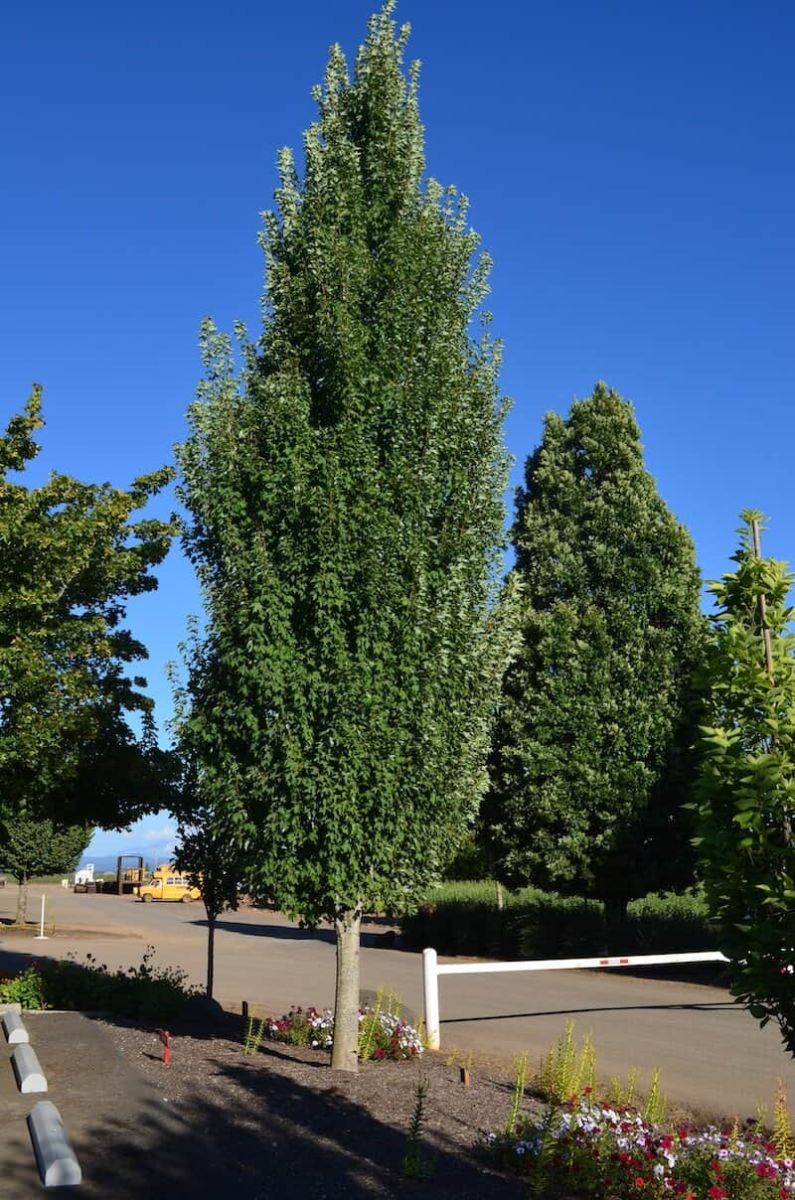
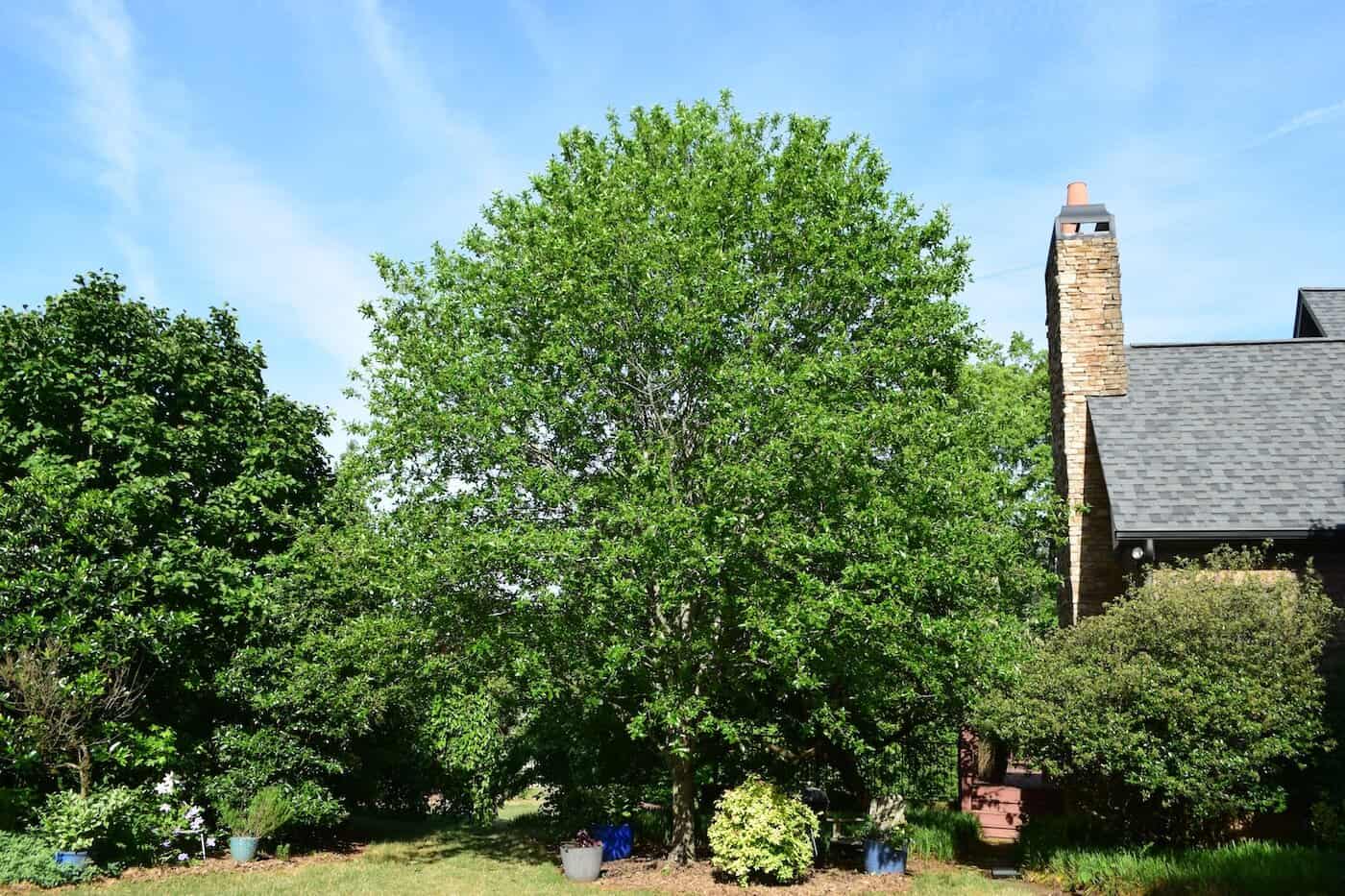
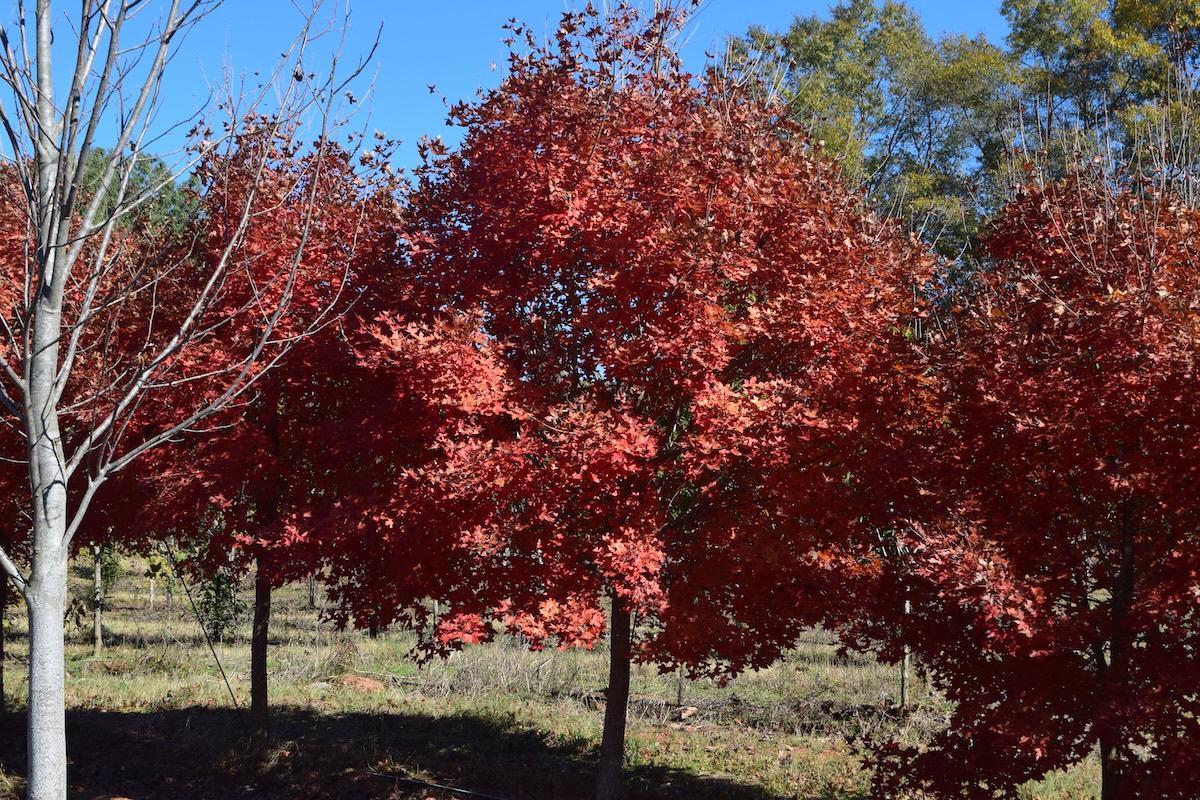
Acer x freemanii Armstrong Gold® (‘JFS-KW78’) is a seedling of ‘Armstrong’ with superior columnar habit, darker green summer foliage, and yellow orange fall color. The tree in our garden is better than advertised. 40’ by 12’. Zone 4-8. Bred by Keith Warren, J Frank Schmidt and Son Co. (5. and 6. below)
Red Sentinel™ (‘WW Warren’) is another Keith Warren bred introduction with medium green foliage turning brilliant red in autumn. 40’ by 18’. zone 5-8.
Betula platyphylla Parkland Pillar™ (‘Jefpark’) is narrow columnar with dark green foliage that turns yellow in the fall. Listed as Japanese beetle resistant. 30’ by 8’. Zone 3. Definitively a cold climate tree and probably not suitable below zone 6. (7. below)
Carpinus betulus ‘Fastigiata’ is the standard columnar hornbeam with dark green foliage and pleasing yellow fall color. It widens with time and loses the perfect youthful columnar outline. Easily pruned to maintain shape and often used for screens and hedges. 35’ by 20’ feet. Zone 5 to 8. Common in the southeast, but performance improves in colder climates. ‘Frans Fontaine’, ‘Lucas’, and ‘Pinocchio’ are not as wide spreading . (photos 8. and 9. of Fastigiata below)
Acer x freemanii armstrong gold schmidt
Image 1 of 5
Carpinus caroliniana is a formidable competitor to the upright European hornbeam with new selections entering the market. The species is common through the eastern United States. Clarynette® (‘CCMTF2’), Collynair® (‘CCMTF1’) and Palisade® (‘CCSQU’) are southern selections, Zone 5 to 8). Rising Fire® (‘Uxbridge’) and Skylark® (‘Shelby’, hybrid between C. betulus and C. caroliniana) are zone 4. (10. Photo of Palisade below)
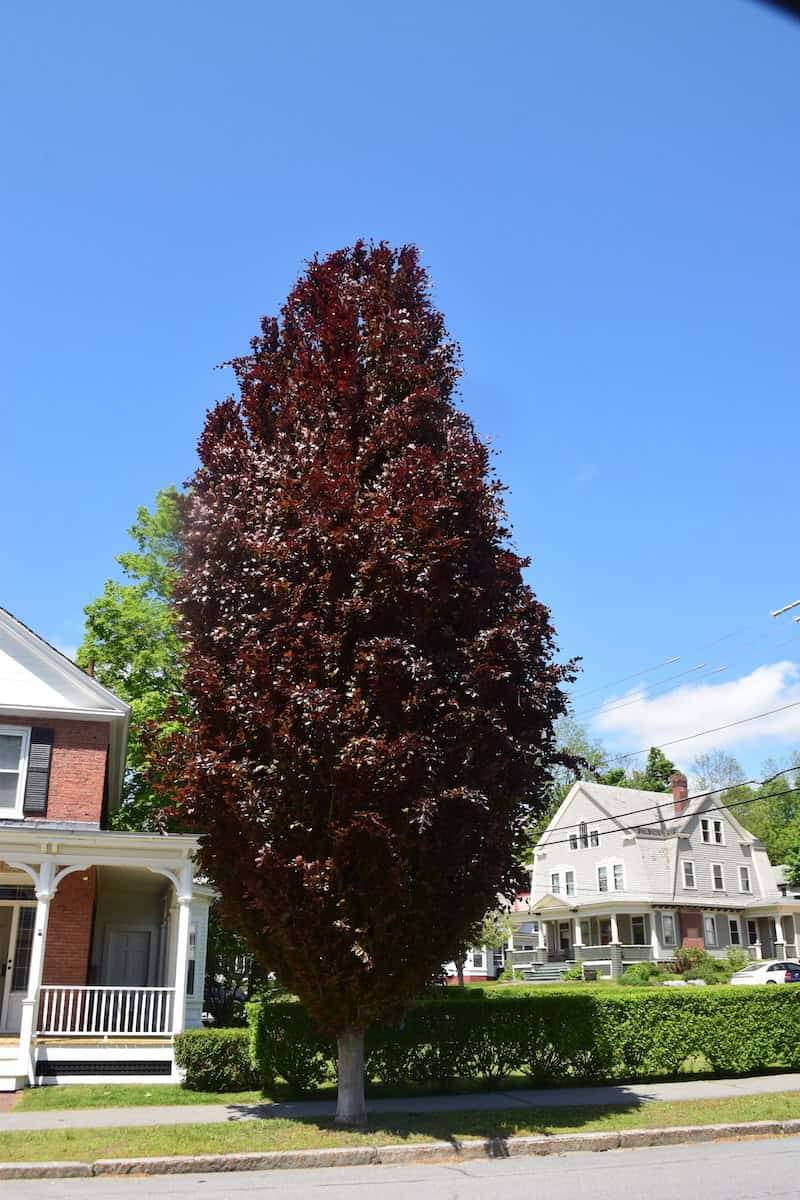
Fagus sylvatica ‘Dawyck’ is the original columnar green leaf beech found in Scotland before 1850. Zone 5 to 7. Since that time breeders have developed ‘Dawyck Gold’ and ‘Dawyck Purple’. All in the range of 50’ high and 12 to 15’ wide. (11. Photo of ‘Dawyck Purple’ in Vermont below)
Liquidambar styraciflua ‘Slender Silhouette’ was discovered growing along the shore of Tims Ford Lake in Middle Tennessee. Scion wood was collected in August 1992 by the late Don Shadow, Shadow Nursery, Winchester, TN, and Mike Hayman, Trees Louisville. The name perfectly describes the growth habit. Tall, slender, columnar with no bulbous or splaying shoots. Trees 50 to 60’ high are shaped like elongated cylinders. Foliage is lustrous dark green, developing yellow orange fall colors. Although listed as sparse fruiting, I recorded trees with hundreds of “balls” as they are commonly known. 60’ high and 8’ wide. Mike Hayman estimated the original tree to be 100’ tall. Zone 5 to 8/9. One of the best columnar trees for uniformity, exquisite foliage, and adaptability. (12. and 13. Photos below)
Liriodendron tulipifera ‘Fastigiatum’ (‘Arnold’) has been in the trade for many years and is now justifiably finding a home in contemporary landscapes. Possesses the great qualities of the species but reaches 50’ high by 15’ wide. Zone 5 to 8. (14. and 15. Photos below)
11.-fagus-sylvatica-dawyck-purple-vermont-3-copy
Image 1 of 5
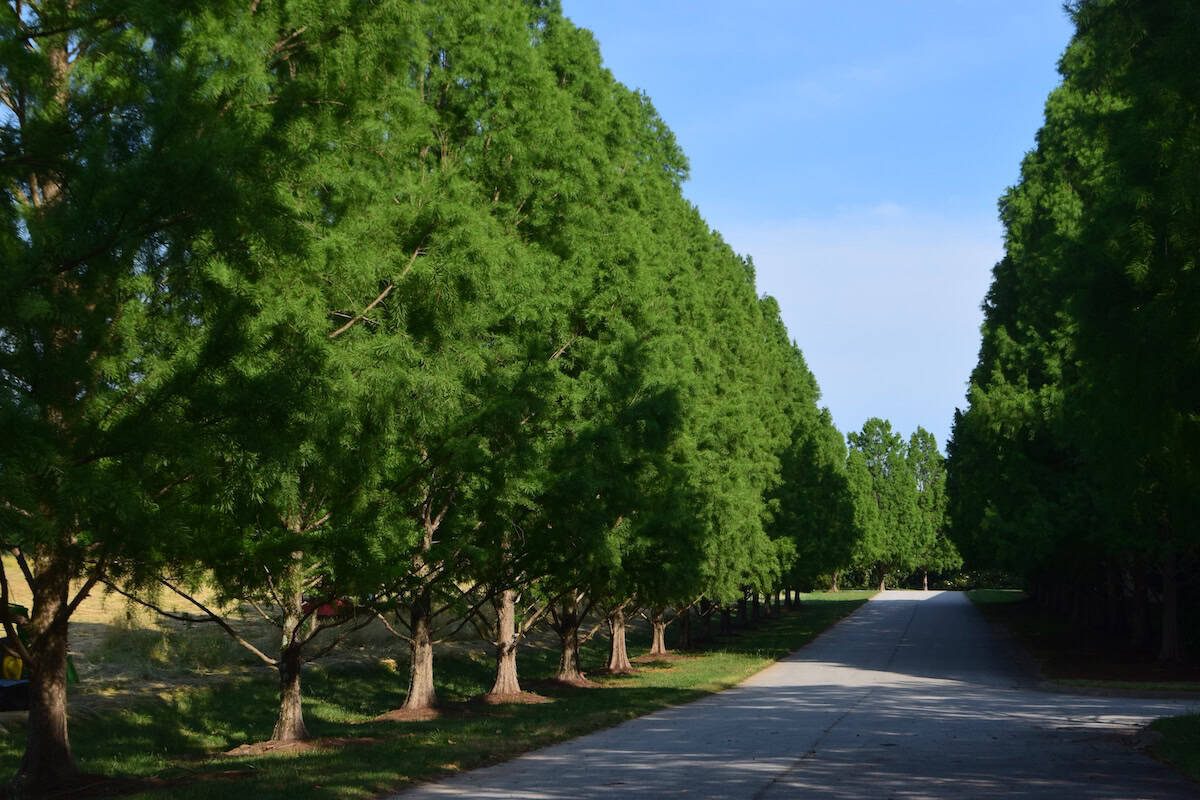
Taxodium distichum Shawnee Brave® (‘Mickleson’) raised the bar for upright trees to emulate. Discovered and introduced by the late Earl Cully, Jacksonville, IL, who championed improved native tree species years before they became the norm. Although introduced over 60 years ago, it is still recognized as the gold standard of fastigiate-pyramidal trees. Sage green summer foliage becomes rusty orange in fall. The beautiful gray to reddish brown bark sloughs in strips and slivers, providing year-round beauty. The species is adaptable to wet as well as drier soils and hardy from zone 5 to10. 50-75’ high and 15-20’ wide. At Milliken Research, Spartanburg, SC, an allée was planted in early 2000. Trees are now 50’ high with no sign of slowing. (16., 17., and 18. Photos below)
Zelkova serrata ‘Musashino’ is not well known but well adapted to the Middle Atlantic and Southeast where it outperformed the species and cultivars. Broad columnar in outline, slightly wider at the top than the base, with age densely branched with occasional splaying/straying branches. Trees at Milliken Research, Spartanburg, SC, are now 38 years old and in perfect health. I am not a fan of the species, but ‘Musashino’ has demonstrated exceptional resilience in the heat and drought of the South. Medium to dark green foliage develops yellow orange fall color. 45’ by 15’. Zone 5 to 8. Voted The Society of Municipal Arborists 2016 Urban Tree of the Year. I noted rave reviews about performance on the West Coast. (19. and 20. Photos below)
The above selections are commercially available and reliable performers. Many other fastigiate/columnar cultivars are nested in the deciduous tree genera Celtis, Chionanthus, Cornus, Ginkgo, Gymnocladus, Koelreuteria, Magnolia, Malus, Metasequoia, Nyssa, Parrotia, Populus, and Prunus. Needle evergreen genera Abies, Calocedrus, Cedrus, Picea, Pinus, Thuja, and Tsuga are home to fastigiate/columnar cultivars. My long-term goal is to assemble an inventory/checklist of these cultivars coupled with their availability in U.S. commerce.